- Diverse Categories: From technology and lifestyle to finance and travel, G R Sites encompasses a plethora of categories, ensuring that you find the perfect fit for your niche. This diversity enables you to target specific audiences and maximize the impact of your backlink strategy.
- Established Presence: The websites featured on G R Sites boast a longstanding presence on the internet, garnering returning viewers from across the globe. Their credibility is further validated by being indexed by all major search engines, indicating their relevance and authority in their respective domains.
- Quality Assurance: Every link and blog post offered through G R Sites undergoes rigorous scrutiny to uphold the highest standards of quality. You can rest assured that each placement is meticulously vetted to ensure relevance, authority, and adherence to ethical SEO practices.
Our team of experts deliver valuable content and insights to help you make informed decisions and achieve your goals. If you're tired of shifting through countless websites in search of relevant information, look no further, our site would be your go-to source for all the information and suggestions you need on a variety of topics.
Wednesday, August 28, 2024
Links
Tuesday, August 27, 2024
How Apple Watch Helped Me Prioritize Health
As an IT professional, it's easy to get completely absorbed in work, often to the point where we forget about the most important thing—our health. Long hours spent sitting in front of a computer, skipping meals, and missing out on physical activity becomes second nature. That’s exactly where I found myself until I stumbled upon a tool that turned things around for me: the Apple Watch.
At first, I didn’t think much of it. It was just another piece of tech, something I wore out of habit, not realizing the potential it held for my well-being. But after a few months, the subtle nudges—those stand reminders and daily steps—began to sink in. Gradually, they transformed how I approached my health. What started as simply wearing a smartwatch has since evolved into a complete shift in how I take care of myself.
Let me share how the Apple Watch helped me prioritize my health and, over time, turned me from someone who barely moved into someone who now embraces daily walking workouts.
Starting Small with Simple Tracking
When I first put on my Apple Watch, I honestly didn’t care much about all the health metrics. The idea of tracking my stand minutes or step count felt like an afterthought. Like most busy professionals, my focus was on work, and I wasn’t ready to admit that sitting for hours on end wasn't doing me any favors.
- Ignoring Health Metrics InitiallyIt’s easy to dismiss those notifications—"Stand up!" or "Time to move!"—especially when you're knee-deep in work. In the beginning, I brushed them off, thinking, "I’m too busy for this." But what I didn’t realize was that these small reminders were essential to breaking my sedentary habits.
- Apple Watch’s Stand Minutes & Daily StepsOne thing the Apple Watch does exceptionally well is making health metrics easy to track. It’s not invasive, but it's always there, silently keeping tabs on your activity, nudging you when needed. I liked that it didn’t overwhelm me with too much information, just the basics: stand minutes, step count, and move goals.
- Starting with Small, Manageable GoalsInitially, the only goal I set was to hit the minimum required stand minutes per day. It seemed doable and didn’t require a complete lifestyle overhaul. The Apple Watch made these small goals seem achievable, giving me a gentle push rather than a hard shove. That was key—it wasn’t about running a marathon on day one; it was about standing up more.
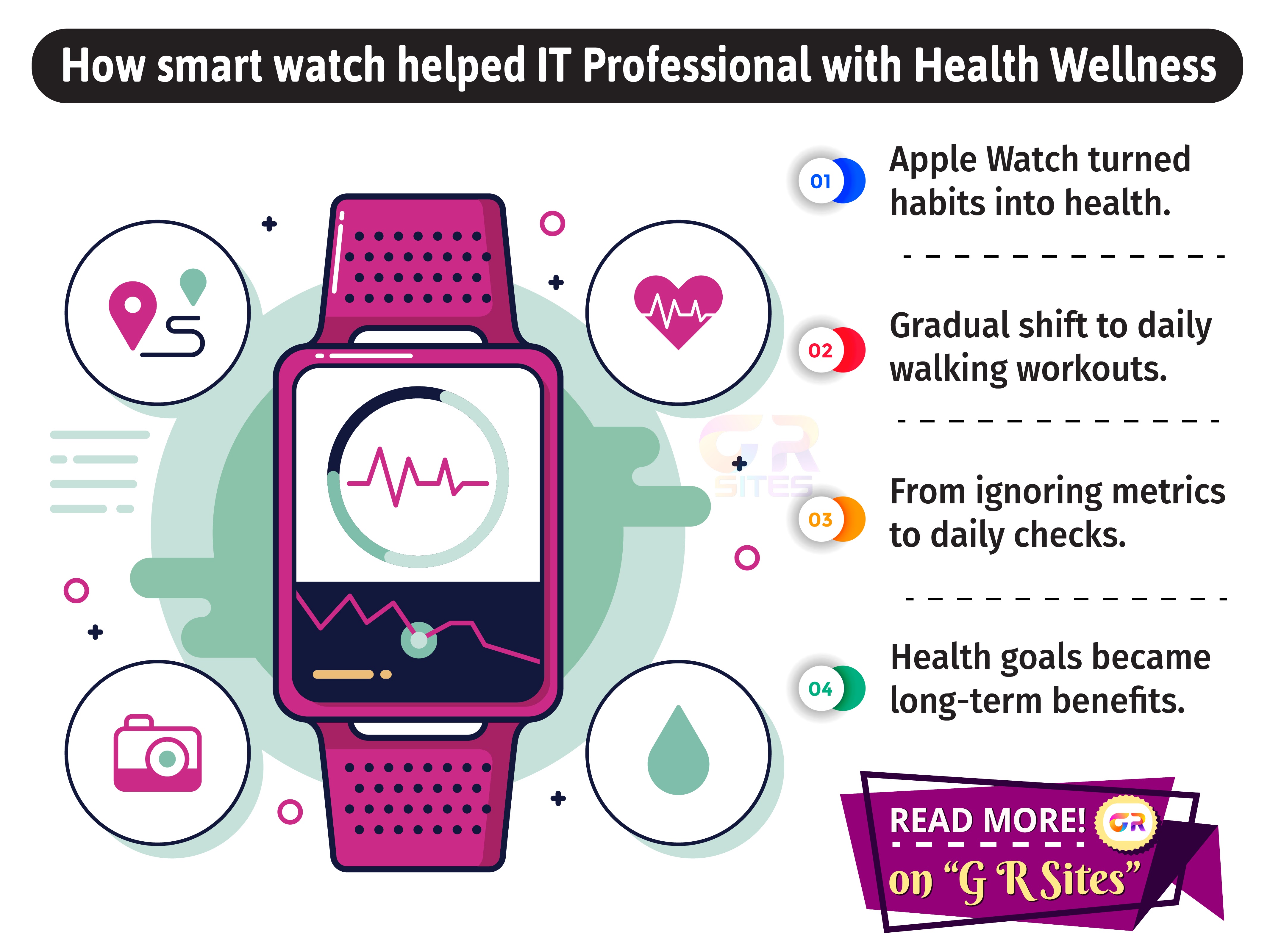
- The Shift from Ignoring to Using MetricsSlowly but surely, I began paying attention to the metrics. They went from something I dismissed to something I found myself checking. It became a game—"How many steps have I taken today?"—and without realizing it, I was already on the path toward better health.
Building Healthy Habits
Once I started paying attention to my stand minutes and daily steps, things began to shift. What was once a weekly effort to meet my health goals slowly turned into a daily routine. The Apple Watch was like having a personal coach on my wrist, gently nudging me to stay active.
- From Weekly to Daily GoalsAt first, my focus was to hit my health targets once a week. It was an easy way to ease into it, given my busy work schedule. But as I got more accustomed to the metrics, I started thinking, “Why not aim for twice a week? Or even three times?” This gradual increase didn’t feel forced; it felt natural.
- Apple Watch Reminders Keep You on TrackOne of the most helpful features of the Apple Watch is its ability to remind you to move. These reminders aren’t intrusive—they pop up just enough to make sure you don’t forget. I found myself relying on them, almost looking forward to the small challenges throughout the day.
- Nudging Me Toward ConsistencyConsistency is key when it comes to building healthy habits, and the Apple Watch made sure I stayed consistent. The more I engaged with it, the more I wanted to keep those rings closed. It’s funny how a little visual like a ring can become so motivating, but closing my activity rings became a daily goal.
- Transitioning to a Healthier RoutineSoon, the weekly check-ins became a part of my daily life. I wasn’t just standing or walking because my watch told me to—I was doing it because I enjoyed how it made me feel. The nudge had worked its magic, and my health goals were no longer a chore but something I genuinely wanted to achieve.
The Long-Term Benefits of Being Health-Conscious
As I moved from simply tracking steps to engaging in daily walking workouts, I noticed profound changes. What started with a few steps here and there transformed into a new way of living. The Apple Watch was more than just a gadget—it was the catalyst that helped me become more health-conscious.
- Walking Workouts Became Part of My RoutineAfter consistently closing my rings, I decided to step it up and incorporate daily walking workouts into my schedule. It didn’t have to be a long, grueling workout—just 30 minutes of walking every day. I found that walking helped clear my mind and refresh my focus for the tasks ahead. It also fit easily into my day, whether it was before work, during lunch breaks, or in the evening.
- Improving Physical and Mental Well-BeingThe results were undeniable. Physically, I felt more energized, and mentally, I was sharper. Regular movement had a clear impact on my productivity, reducing the burnout that comes from being glued to a desk. I started sleeping better, and my stress levels dropped significantly, all from incorporating simple walking routines.
- Balancing Work and HealthOne of the most significant changes was learning how to balance work with my health. I no longer felt guilty about taking time to move or step away from my computer. In fact, the Apple Watch’s reminders made me realize that these small breaks were helping me become more productive, not less.
- Wearable Tech: A Tool for Long-Term HealthThe Apple Watch didn’t just push me to be active—it changed my mindset about health. I began to see how wearable technology can play a crucial role in long-term health management, especially for people like me who struggle to balance busy schedules with fitness goals. It became less about the device and more about the lifestyle it inspired.
My final thoughts
For someone like me—a busy IT professional who used to prioritize work above all else—the Apple Watch turned out to be a game-changer. It wasn’t just a watch; it was a tool that helped me transform my health, one small step at a time. From simply tracking stand minutes and steps to incorporating daily walking workouts, I’ve seen both physical and mental benefits that have made all the difference.
The lesson I’ve learned is simple: health doesn’t have to be complicated or overwhelming. By using the right tools and staying consistent with small, manageable goals, anyone can make strides towards a healthier, more balanced life.
Now, I can confidently say that wearing an Apple Watch wasn’t just a smart tech decision—it was a step toward a healthier future.
Friday, June 28, 2024
Essential Car Accessory: Battery Jumper Cables
- Immediate Assistance: Jumper cables allow you to get back on the road quickly, especially in remote areas where help might not be readily available.
- Prevents Being Stranded: They provide a quick fix, ensuring that you're not left waiting for roadside assistance, which can be particularly crucial in unsafe or unfamiliar locations.
- Aids Others: If you come across another motorist in need, having jumper cables means you can offer assistance, fostering a sense of community and goodwill on the road.
- Reliable Backup: In case of a battery failure, they serve as a dependable backup, reducing anxiety and enhancing your confidence while driving.
- Avoids Towing Fees: With jumper cables, you can avoid the costly expense of towing services.
- Reduces Downtime: Getting your car started quickly means you can continue with your plans without significant delays.
- Minimizes Repair Costs: Regular use of jumper cables can help diagnose and address battery issues early, potentially saving on more extensive repairs down the line.
- Saves Money: Instead of paying for emergency services or new batteries, a one-time investment in quality jumper cables can offer repeated benefits.
- Universal Use: They can be used on any vehicle with a compatible battery, from cars and trucks to motorcycles.
- Compact and Portable: Jumper cables are easy to store in your trunk, taking up minimal space compared to other emergency equipment.
- User-Friendly: Modern jumper cables come with clear instructions and safety features that make them easy for anyone to use, even with minimal automotive knowledge.
- Long-Lasting: High-quality jumper cables are durable and can last for years, providing a reliable solution whenever the need arises.
- Standard Safety Gear: Just like airbags and seatbelts, jumper cables should be a standard safety feature.
- Consumer Expectation: As more people become aware of their importance, the expectation for manufacturers to include them grows.
- Regulatory Compliance: Future safety regulations might require more comprehensive emergency kits, including jumper cables.
- Proactive Safety Measures: Including jumper cables shows a manufacturer’s commitment to customer safety.
- Standard Equipment: Most cars come with a spare tire, but not all include jumper cables. Car manufacturers should consider this disparity and include both as standard equipment.
- Aftermarket Purchase: Jumper cables are easy to purchase and add to your emergency kit if not already included. Ensure you choose a reliable brand for quality and durability.
- Storage Solutions: Both items should have designated storage spaces in your car to keep them accessible yet out of the way during regular use.
- Consumer Awareness: Increasing consumer awareness about the importance of both tools can drive demand and influence manufacturers to include them as standard equipment.
- Position the Cars: Park the working car close enough for the cables to reach, but not touching the dead car.
- Connect Cables: Attach the red clip to the positive terminal of the dead battery, then the other red clip to the positive terminal of the working battery.
- Ground the Connection: Attach the black clip to the negative terminal of the working battery, then the other black clip to an unpainted metal surface on the dead car.
- Start the Engines: Start the working car and let it run for a few minutes, then try starting the dead car.
Sunday, May 26, 2024
Tolls in India: Hidden Money Machine for government
- Historical Perspective on Toll Prices: The story of toll roads in India dates back decades, but it's the last 15 years that have seen the most dramatic changes. Initially, tolls were introduced as a means to fund the construction and maintenance of new highways. However, once the roads were built, the expected reduction in toll rates never materialized. Instead, prices have steadily climbed, often outpacing inflation and wage growth.
- Current Toll Rates and Their Impact on the Average Citizen: Today, the toll charges on major highways can range from ₹60 to ₹200 for a single trip, depending on the distance and the road. For daily commuters, this adds up quickly. Imagine shelling out ₹200 every day just to get to work and back—that's ₹4,000 a month, which is a significant chunk of change for the average Indian household. The burden is even heavier for long-distance truck drivers and transport companies, ultimately translating to higher prices for goods and services.
- Government's Stance on Toll Price Increases: The government's rationale for the continuous toll hikes is ostensibly rooted in the need for road maintenance and the development of new infrastructure. However, this explanation doesn't hold much water for the public, especially when there’s no visible improvement in road quality. People are beginning to ask: If we're already paying road tax when we buy a vehicle, why are tolls necessary at all? And why do they keep rising?
- Dynamic Pricing Models: Some countries adjust toll rates based on traffic conditions.
- Electronic Toll Collection (ETC): ETC systems streamline toll payments and often provide discounts.
- Frequent User Discounts: Regular commuters receive reduced rates in many countries.
- Time-of-Day Pricing: Off-peak travel is incentivized with lower toll rates.
- Deterrent to Regional Investment: High tolls may discourage businesses from investing in certain areas.
- Economic Disparity: Rural areas might suffer more due to high transportation costs.
- Public Protests: Continued price hikes could lead to widespread public dissatisfaction.
- Political Instability: Government inaction on toll issues might result in political unrest.
- Re-evaluate Road Tax Structure: Consider reducing road tax or integrating it with tolls.
- Cap on Toll Increases: Implement a maximum limit on toll price hikes.
- Transparent Pricing: Ensure that toll price changes are justified and communicated clearly.
- Incentivize Off-Peak Travel: Offer discounts for traveling during non-peak hours.
- Thorough Audit: Ensure transparency in toll collections and expenditures.
- Public-Private Partnerships: Explore collaborative management of toll roads.
- Periodic Reviews: Regular assessments of toll rates with relevant stakeholders input and public opinion.
- Balanced Policies: Aim for policies that consider both revenue needs and public affordability.


